
Basmati rice vs. jasmine rice: which rice suits your dish?
Here you'll learn the key differences and find the right type of rice for curry, biryani, vegetable dishes and more.
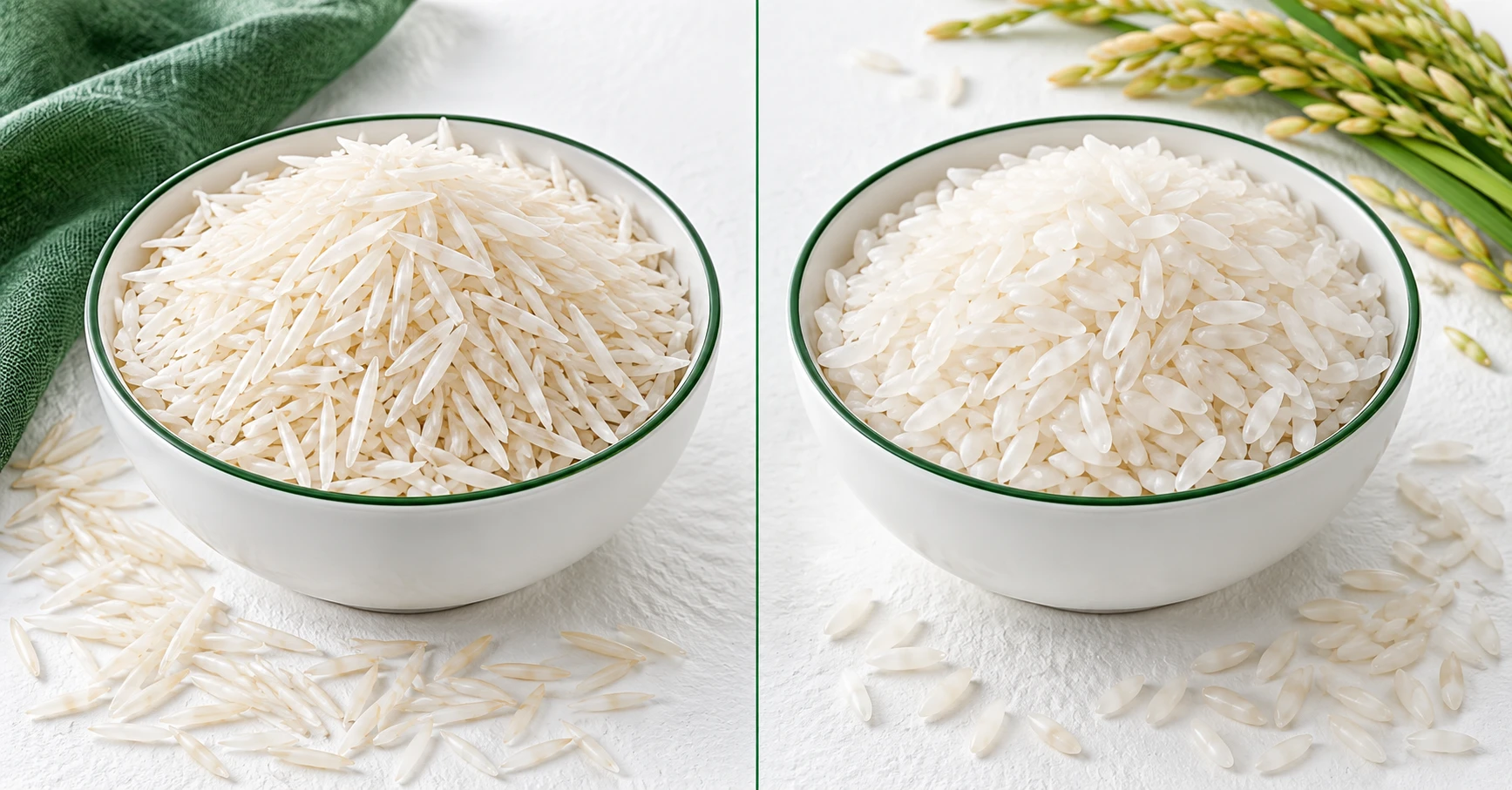
Basmati or jasmine rice – which one should go in the pot? Both belong to the aromatic long-grain rice varieties, but they differ in fragrance and, above all, in texture. Your choice affects whether the rice sits loosely on the plate or accompanies the sauce in a soft, slightly sticky way.
Here you'll learn the key differences and find the right type of rice for curry, biryani, vegetable dishes and more.
Here you'll learn the key differences and find the right type of rice for curry, biryani, vegetable dishes and more.
Briefly explained: what's the difference between basmati and jasmine rice?
Basmati and jasmine rice compared
| Basmati rice | Jasmine rice | |
|---|---|---|
| Traditional origin | India and Pakistan | Thailand, also other South East Asian countries |
| Rice grain | Long and slender | Long-grain, usually slightly shorter and broader than basmati |
| Fragrance | Aromatic, delicately floral depending on the variety | Floral, sometimes with a note reminiscent of popcorn |
| Texture after cooking | Light and fluffy with separate grains | Soft and slightly clingy |
| Typical use | Biryani, pulao, Indian curries, rice side dishes | Thai curries, South East Asian dishes, coconut rice |
| Suitable if you … | … want grains that stay as separate as possible | … prefer a softer, slightly clingy rice side dish |
These characteristics can vary depending on the variety and preparation. The amount of water and cooking time also determine how well your rice turns out.
Taste and fragrance: which rice tastes better?
Both types of rice bring their own aroma. Basmati has a fine, aromatic scent, while jasmine rice has a floral fragrance that can also be reminiscent of popcorn. These aromas develop naturally within the rice plant.
Which one tastes better to you also depends on the mouthfeel you prefer: if you love individual, loose grains, basmati is a good choice. If you'd like the side dish to be softer and slightly clingy, jasmine rice is often the better fit.
Try both with the same vegetable stir-fry. This way you'll notice the difference more clearly than with two completely different recipes.
Basmati or jasmine rice: which suits which dish?
For biryani and pulao: basmati
If you prefer particularly long grains, you can use 1121 basmati rice. In our range you'll find this variety from Punjab in Pakistan – for spiced rice dishes and as an aromatic side dish.
learn more about 1121 long-grain basmati rice
Discover nowFor Thai curry: jasmine rice
You can still serve your Thai curry with basmati, though. Choose it if you prefer a lighter, fluffier rice side dish.
For Indian curries: basmati
Basmati is a classic accompaniment to an Indian curry. The light, separate grains go well with creamy, spicy and tomato-based sauces. You can also serve it as a side dish with dal or a vegetable dish.
For vegetable stir-fries and rice bowls: as you prefer
- Basmati, if you want the grains to sit loosely among the vegetables and other ingredients.
- Jasmine rice, if you'd like a softer, more clingy base.
So for an easy everyday dish, you don't necessarily need to buy a specific variety. What matters is which result you like best.
Cooking basmati and jasmine rice: what matters
1. Wash the rice before cooking
Rinse the rice with cold water until the water running off becomes noticeably clearer. This removes excess starch on the surface, helping to achieve an even cooking result.
2. Soak basmati if needed
With basmati, soaking before cooking can be helpful. You can soak our Sultana's Premium Basmati rice for around 20–30 minutes. Afterwards, follow the preparation instructions, as soaked rice behaves differently during cooking than dry rice.
3. Choose the water amount and cooking time to match the packaging
A single rice-to-water ratio doesn't work equally well for every product. Variety, pre-treatment, soaking time and cooking method all influence the result.
So start by following the instructions on the packaging. Don't automatically apply the guidelines for white basmati to sella basmati or wholegrain rice: pre-treated and unhulled varieties may need different cooking times.
Order aromatic basmati rice online
Choose the right pack size for your household or kitchen. We deliver free of charge within Germany – with no minimum order value.
Buy basmati rice now
Frequently asked questions about basmati and jasmine rice
Are basmati and jasmine rice the same?
No. Both are aromatic long-grain rice varieties, but they differ in origin, grain shape and texture, among other things. When prepared correctly, basmati tends to stay light and fluffy, while jasmine rice becomes softer and clings together more.
Which rice is less sticky: basmati or jasmine rice?
Basmati is the better choice if you want grains that stay as separate as possible. Washing the rice and using the right amount of water help achieve this. However, too much water or too long a cooking time can make even basmati soft and sticky.
Which rice goes better with curry?
Basmati is often served with Indian curries, while jasmine rice tends to accompany Thai curries. But you can also decide based on your own preference: basmati for a light side dish, jasmine rice for a softer one.
Is jasmine rice sticky rice?
Jasmine rice does cling together slightly after cooking, but it shouldn't be equated with the separate rice variety known as sticky rice. If a recipe specifically calls for sticky rice, you should use the appropriate product.
Is basmati always white rice?
Jasmine rice does stick together slightly after cooking, but it shouldn't be equated with its own type of rice, glutinous rice. If a recipe specifically calls for glutinous rice, you should use the appropriate product.
What does 1121 mean for basmati rice?
1121 refers to a Basmati variety. It's known for its especially long grains and their notable elongation during cooking. The number is not a weight or quality grade.