
1121 Basmati Rice or 1509 Basmati Rice: What's the Difference?
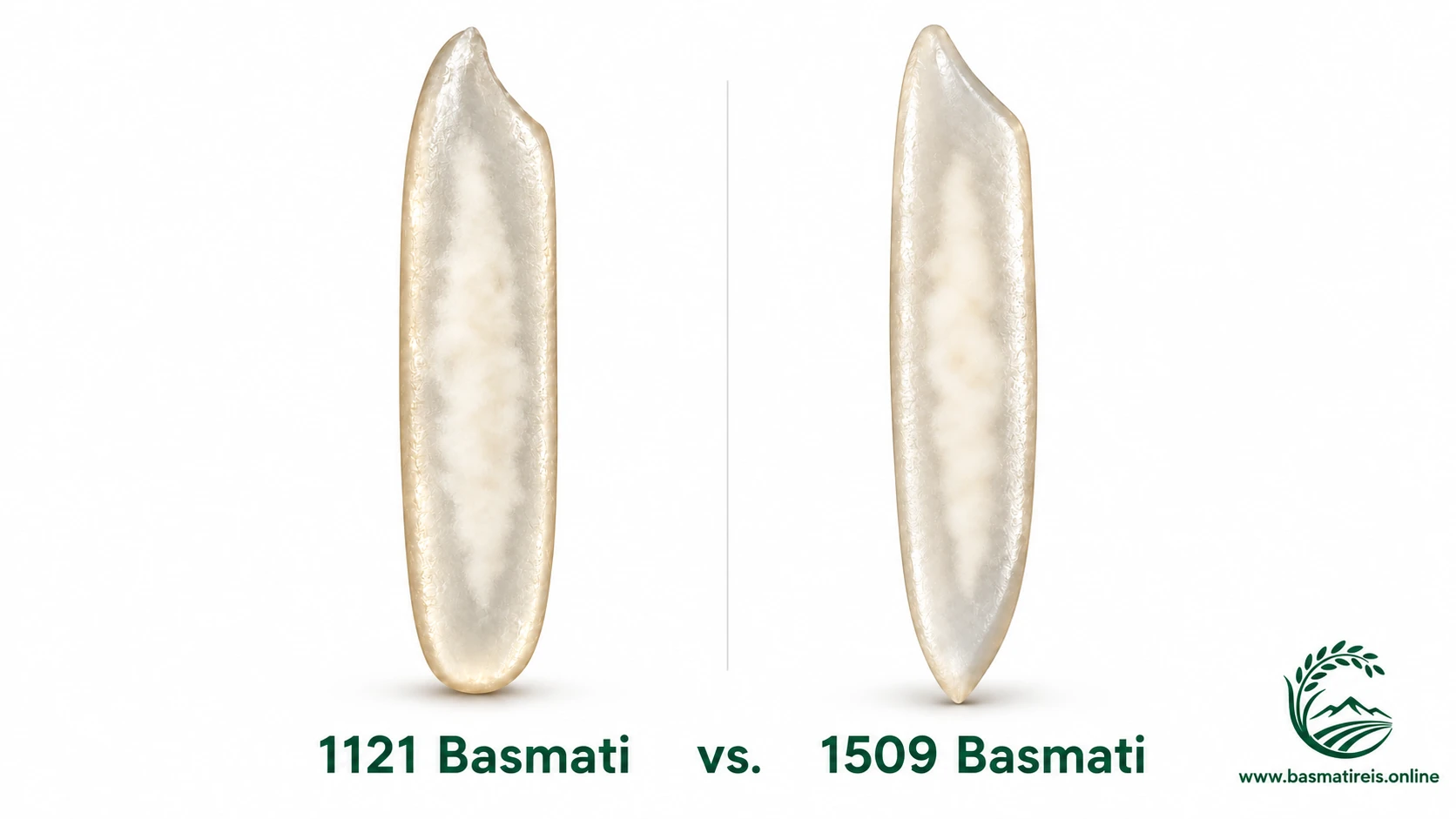
1121 Basmati and 1509 Basmati are both extra-long-grain basmati varieties of comparable quality. The main difference lies in the growing period: 1509 matures more quickly (115 instead of 145 days). Visually, they are very similar. Both are equally suitable for cooking – which variety suits you best will become clear when cooking.
Long grains, a pleasant aroma and a light, fluffy texture: both 1121 and 1509 are extra-long-grain basmati varieties. Both are available as steam rice and are suitable for fragrant rice dishes. But what sets the two varieties apart – and what should you look out for when buying?
What does “Steam” mean for basmati rice?
Steam rice should therefore not be confused with pre-cooked rice. This processing also differs from Sella rice, which undergoes a parboiling process involving soaking, heat treatment and drying. Both varieties – 1121 and 1509 – can be offered in different processing forms.
Grain length and appearance
1509 also has long, slender grains and very good grain length after cooking. The two varieties can look very similar. A simple classification such as “1121 is long, 1509 is short” therefore does not do them justice. The Indian Agricultural Research Institute (IARI) explicitly describes 1509 as a variety with very good grain and cooking quality.
Cooking behaviour and use
Both varieties are therefore suitable for cooking: as a side dish for curries, for pulao or for biryani. How light, soft or firm the finished rice turns out should be judged based on the specific product. The variety number alone is no substitute for a cooking test.
Aroma: Is 1121 fundamentally better?
When shopping, it is therefore worth comparing the aroma and taste of the product on offer, rather than deciding on the variety name alone.
A clear difference lies in cultivation
1509 matures earlier than 1121. IARI states around 115 days for 1509 and around 145 days for 1121. The shorter growing period can also save on irrigation. This difference is particularly relevant to agricultural cultivation; it does not automatically mean lower quality on the plate.
What should you look out for when buying?
- For a fair comparison, both products should have as similar conditions as possible:
- the same processing: compare steam with steam
- comparable storage time or ageing
- a similar proportion of whole and broken grains
- verifiable information on variety and origin
- a cooking test under the same conditions
Buy 1121 Basmati Rice
Discover now